 Job Prosperity
GUIDE
Job application pipeline stages that keep a search moving
Choose a compact set of stages, define the event that moves a role forward, and make every active opportunity easier to review.
A job application pipeline turns a list of roles into a workflow. Each stage describes the current relationship between you and an employer, from a role you are considering to an application, interview, offer, or closed outcome. The purpose is not to document every recruiting nuance. It is to make the next decision obvious.
The best stage system is small, mutually understandable, and tied to evidence. If you cannot explain what changed when a card moved, the stage probably does not help. Start with the six-stage model below, then adapt it only when your search repeatedly needs a distinction.
A practical six-stage pipeline
| Stage | Entry event | Typical next action |
|---|---|---|
| Prospect | You saved a role worth evaluating. | Review requirements and decide whether to apply. |
| Applied | You submitted the application. | Record confirmation and choose a review date. |
| Conversation | An employer began a substantive exchange. | Confirm the next conversation or requested material. |
| Interview | An interview or assessment is confirmed. | Prepare for the specific format and participants. |
| Offer | You received terms you can evaluate. | Review the complete offer and decision timeline. |
| Archived | The role is closed or no longer active for you. | Record the outcome, then remove it from active review. |
“Conversation” is intentionally broader than a recruiter screen. It covers the meaningful exchange before a formal interview is scheduled. If assessments are common in your field and require a distinct kind of work, add an assessment stage. Otherwise, record the assessment as the next action inside interview.
Define movement with observable events
A role enters applied when you submit, not when you plan to finish the application. It enters interview when the conversation is confirmed, not when someone mentions that interviews may happen. Observable entry rules prevent optimistic stage changes and make the board trustworthy.
Write a one-sentence rule for each stage. When a confusing case appears, ask which current fact changes your work. An automated rejection belongs in archived. A recruiter asking for availability belongs in conversation with “reply with times” as the next action. A take-home request can belong in interview if that is where you manage preparation.
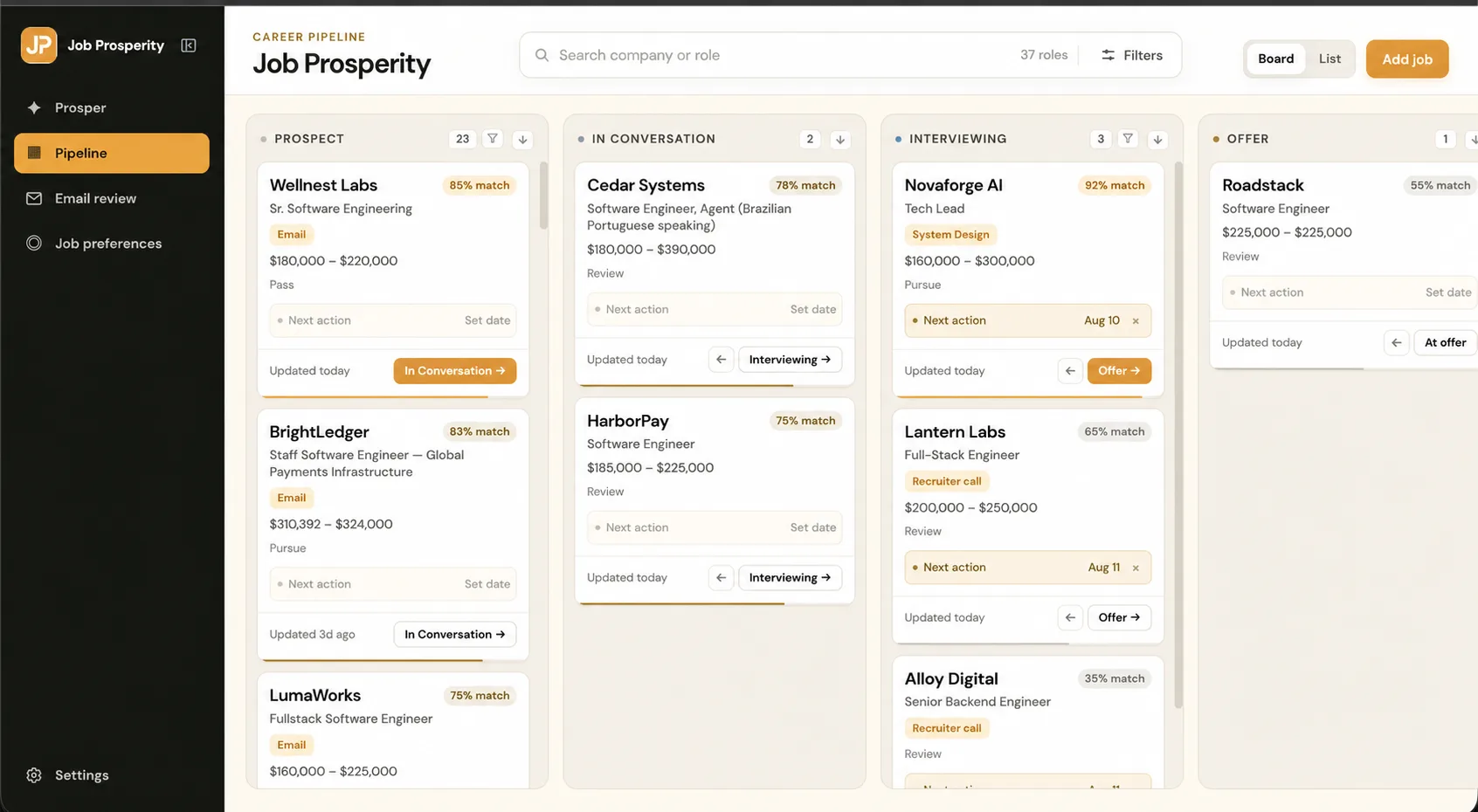
Keep status and next action separate
Stage describes the employer relationship; next action describes your work. Combining them produces labels such as “waiting for response” or “need to prepare,” which quickly multiply. Keep the role in applied while you wait, add a review date, and specify what you will decide on that date. Keep a confirmed meeting in interview and name the preparation task separately.
This separation also improves weekly review. Scan stages to understand pipeline shape, then scan next actions to plan your time. The Job Prosperity application tracker supports this opportunity-centered approach, while the guide on how to track applications explains the full review rhythm.
Handle waiting, rejection, and inactive roles
Waiting is usually not a pipeline stage because it can happen almost anywhere. An application may be waiting for review, a conversation may be waiting for scheduling, and an interview may be waiting for a decision. Use a next-review date and preserve the meaningful stage.
Archive a role when the employer closes it, you withdraw, the listing proves unsuitable, or continued waiting no longer deserves attention. Record a short outcome such as rejected, withdrew, expired, or no response. Avoid creating a column for every outcome unless you routinely analyze it.
For open conversations, use the follow-up tracker to retain context and timing. It helps you decide whether to contact someone; it does not send messages or manufacture urgency.
Run a weekly pipeline audit
- Confirm that every active role has one stage and one next action.
- Check whether due and review dates still reflect employer timelines.
- Move cards only when an observable event supports the change.
- Archive closed or low-value roles instead of letting them accumulate.
- Review interview logistics against the original invitation.
- Notice bottlenecks, but do not infer performance from a small sample.
A clean pipeline is a decision aid, not a score of your job search. Stage counts can show where attention is concentrated, but they cannot tell you that the pipeline is “healthy” without clear definitions and enough context. Use the data to ask better questions: Are you spending time on roles you still want? Does each live conversation have a deliberate next move?
If email is where stages become unclear, adopt the workflow in Gmail labels for job search. When an interview is confirmed, continue with the interview preparation checklist. Together, these practices create a system that remains useful even as the search grows.
Review the system after several weeks, not after every unusual message. If two stages routinely require the same action, merge them. If one stage repeatedly contains two genuinely different kinds of work, consider splitting it and document both entry rules. Preserve historical meaning when you make the change: decide how existing cards map before renaming columns, and avoid rewriting outcomes merely to make a chart look cleaner. The pipeline should reflect what happened.
Share stage definitions when a coach or accountability partner reviews the board with you. A common vocabulary prevents “conversation” from meaning an informal lead to one person and a scheduled recruiter call to another. Keep private employer communication out of shared views unless there is a clear reason and permission to disclose it.